First-Time Bareboat Charter Route: A 7-Day BVI Sailing Itinerary
 Planning your first bareboat charter in the British Virgin Islands (BVI)? When you’re responsible for planning your own route for the first time, deciding where to go, where to anchor or pick up a mooring, and how much ground to cover can feel overwhelming.
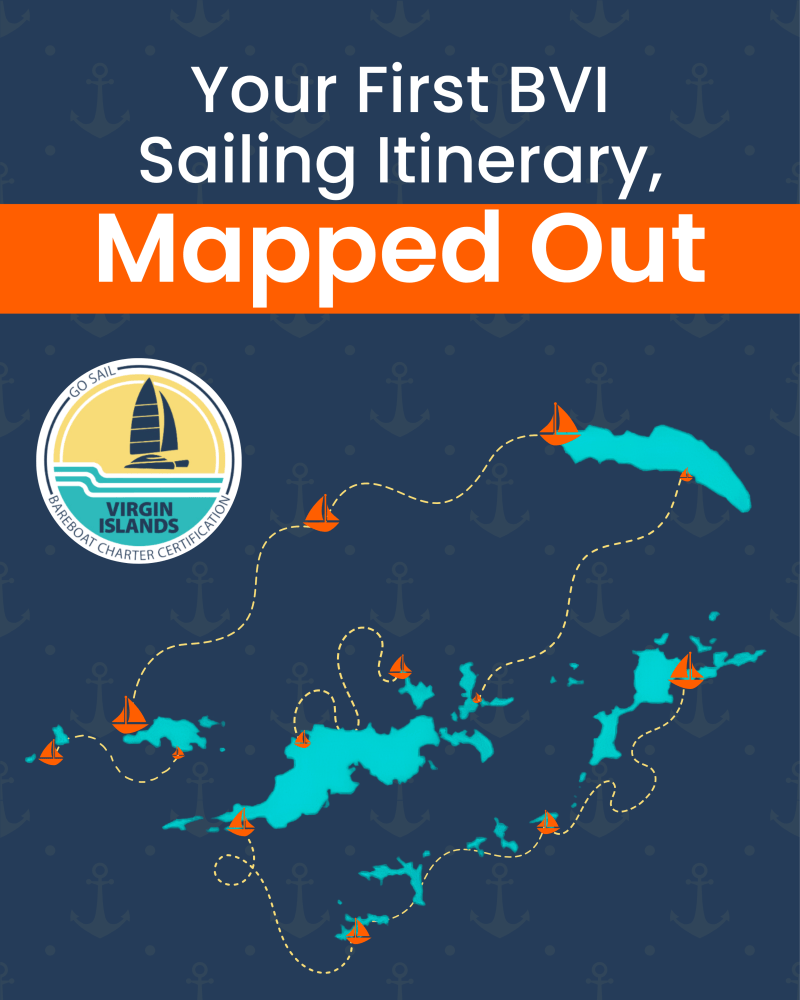
This 7-day BVI sailing itinerary gives you a starting point for your adventure, with stops at some our favorite destinations and practical tips to help you plan a successful first bareboat charter.
What Is a Bareboat Charter?
A bareboat charter allows you to rent a sailboat or catamaran and operate it yourself, rather than hiring a captain to handle the sailing for you. You’ll be responsible for navigating, managing the boat, planning your route, and making decisions along the way.
For sailors taking their first independent charter, the British Virgin Islands offer a memorable introduction to Caribbean cruising. The islands are relatively close together, making it possible to visit several destinations during a weeklong trip without spending every day underway.
Even so, you’ll want to plan carefully. Your route should reflect your crew’s experience, your yacht’s capabilities, local regulations, and the weather and sea conditions.
Day 1: Get Settled
Don’t plan on leaving the dock the first day you get on your yacht. This first day is all about getting settled! Fly into Terrance B. Lettsome International Airport (EIS) on Beef Island, Tortola, or arrive via St. Thomas in the U.S. Virgin Islands.
From there, head to your boat, unpack, review your charts and sailing plans, and familiarize yourself with the yacht. Don’t rush through the boat briefing or safety checks! You’ll be glad to have a relaxed evening before setting sail the following morning.
Day 2: Norman Island
Norman Island can be a great first stop on your itinerary because of its snorkeling, scenic anchorages, and connection to pirate lore. It also balances a manageable day of sailing with plenty of time to explore.
Spend time exploring The Caves, where you can snorkel among colorful marine life and interesting rock formations. The nearby Indians are another well-known snorkeling destination, offering underwater scenery that makes this part of the BVI a favorite among visitors. Depending on your plans and conditions, you might also visit the famous Willy T floating bar.
Day 3: Cooper Island
Next, head toward Cooper Island for a change of pace.
Cooper Island Beach Club offers a place to relax, enjoy a meal, and experience the island’s laid-back atmosphere. The surrounding waters also provide opportunities for snorkeling and diving.
If conditions and your schedule allow, consider exploring the area around Salt Island and the RMS Rhone shipwreck, one of the Caribbean’s best-known dive sites. The wreck is particularly popular with certified divers, while snorkeling opportunities depend on the location and conditions.
Remember to check mooring availability, protected-area rules, and current guidance before deciding where to spend the night.
Day 4: Virgin Gorda
Virgin Gorda offers some of the BVI’s most distinctive scenery.
One of the highlights is The Baths, where enormous granite boulders create pools, passageways, and sheltered spots along the shoreline. It’s a memorable place to explore on foot and a welcome change from days spent on the water.
You can also head toward North Sound, home to destinations such as Bitter End Yacht Club, Leverick Bay, and Saba Rock. The area offers opportunities to enjoy waterfront dining, relax ashore, and take in the scenery.
North Sound is a popular cruising destination, but don’t assume every anchorage or approach is suitable in every condition. Check current charts and local guidance before entering unfamiliar waters.
Day 5: Anegada
Anegada stands apart from the other main BVI islands. Unlike the region’s mountainous volcanic islands, Anegada is low-lying and known for its expansive beaches and surrounding reef system.
Spend time exploring places such as Loblolly Bay or Cow Wreck Beach, where the scenery offers a different perspective on the British Virgin Islands. Anegada is also famous for its lobster and local Caribbean cuisine.
Keep in mind that Anegada requires careful navigational planning because of its shallow waters and surrounding reefs. Don’t treat this leg as an automatic addition to your itinerary. Review the route carefully, assess your crew’s experience, and go only when conditions and your yacht’s capabilities make it appropriate.
Day 6: Jost Van Dyke
For your last full day of sailing, head toward Jost Van Dyke, an island known for its welcoming beach bars, beautiful bays, and relaxed atmosphere.
Great Harbour is a popular destination, with Foxy’s among its best-known establishments. You can also explore White Bay, home to the famous Soggy Dollar Bar, or consider other nearby spots such as Sandy Cay and Diamond Cay.
Spend the day swimming, enjoying local food, and soaking up the island atmosphere. Depending on your anchorage and conditions, there may also be opportunities to explore the Bubbly Pool.
Jost Van Dyke is a fitting stop toward the end of your trip: a chance to slow down and enjoy the culture and hospitality that make sailing the BVI so memorable.
Day 7: Head Back!
Leave enough time for the return sail, refueling, yacht check-in, and any other requirements specified by your charter company. Don’t plan a long excursion or assume you’ll be able to make an early flight.
Tips for Planning Your First BVI Bareboat Charter
A good itinerary isn’t just a list of beautiful places. It’s a plan that works for your crew, your experience, and the conditions you’ll encounter.
Keep these tips in mind as you plan:
-
Don’t try to do everything.
Five island stops in a week can make for an exciting trip, but you don’t have to visit every destination. Leaving room for an extra night somewhere you love can make the experience more enjoyable.
-
Plan around conditions, not just distance.
Short distances on a map don’t tell the whole story. Wind, seas, currents, visibility, and the difficulty of a particular approach all matter when deciding where to sail.
-
Check moorings and overnight options.
Research where you can legally and safely anchor or pick up a mooring, and understand any applicable fees, reservations, or protected-area restrictions.
-
Prepare before you leave the dock.
Review your navigation, weather resources, safety procedures, and yacht systems. Knowing how to use your equipment before you’re underway makes the trip more enjoyable.
-
Build flexibility into your schedule.
Weather changes, busy anchorages, and unexpected discoveries are all part of sailing. Have alternative destinations in mind and be willing to adjust your plans.
-
Be honest about your experience.
Your first bareboat charter should challenge you without pushing you beyond your abilities. If you’re unsure whether a route or destination is appropriate, ask!
-
Book with a reputable company.
Go Sail Virgin Islands is a well known name in the sailing community. We provide weeklong sailing vacations so students can learn to sail and also offer bareboat charters. Learn more about how we can help you book your first bareboat charter in the British Virgin Islands here.