History of Virgin Gorda
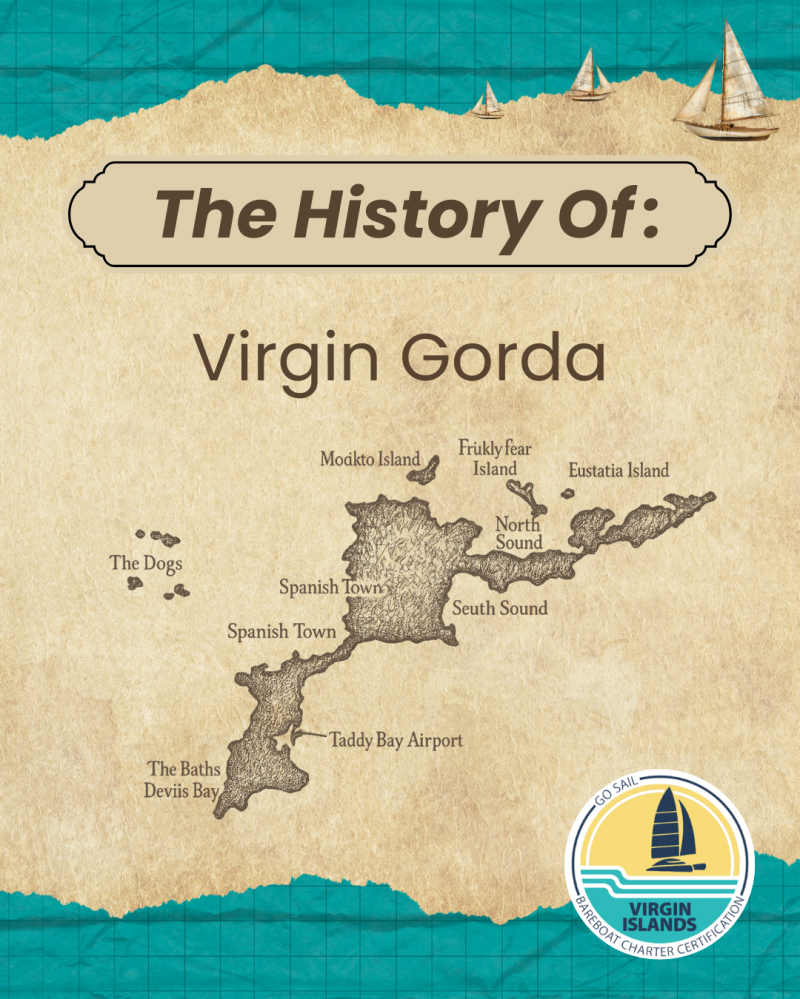 As one of the most treasured islands in the British Virgin Islands, Virgin Gorda is celebrated for its stunning scenery, particularly the iconic Baths. The fascinating history of Virgin Gorda helped shape the island into the paradise that visitors enjoy today.
The Pre-Columbian Era
The earliest inhabitants of Virgin Gorda were indigenous people who primarily lived along the coast. They fished, crafted pottery, and traveled by canoe to nearby islands and cays.
European Discovery
In 1493, Christopher Columbus landed in the Virgin Islands on his second voyage to the New World and is believed to have named Virgin Gorda, meaning “the Fat Virgin,” himself. Although Spain claimed the territory, it never invested heavily in developing or settling the land. As a result, Virgin Gorda remained relatively untouched, with its coves and reefs likely serving as hideouts for pirates.
In the early 1630s, the Dutch West India Company showed interest in mining the island for copper, but they never built more than a small outpost known as Little Dyk’s, focusing instead on other islands.
British Colonization and Copper Mining
England established control of what is now the British Virgin Islands in 1692, marking an important development in the history of Virgin Gorda. Early colonists engaged in agriculture, including sugarcane cultivation, but unlike many other islands in the Caribbean, Virgin Gorda’s sugar production was modest and not a substantial part of the island’s economy.
Instead, copper mining became Virgin Gorda’s main industry beginning in the 1700s. At this time, most of the work was done by enslaved African laborers, without a lot of machinery. However, after slavery was abolished in 1834, Cornish mining specialists were brought to Virgin Gorda to introduce more advanced engineering methods. The mines eventually closed in 1862, but the ruins of Copper Mine Point, a significant post-emancipation mine, remain today and are a popular tourist attraction.
A Modern Vacation Destination
By the 1960s, demand for Caribbean tourism was on the rise, and Virgin Gorda’s natural beauty made it a prime resort destination. A turning point in the history of Virgin Gorda was the opening of Little Dix Bay by Laurance Rockefeller, a businessman and conservationist who prioritized high-value, low-volume tourism with an emphasis on natural beauty, serenity, and exclusivity. His style of development continues to influence the island today.
Little Dix Bay’s success inspired both the government and private enterprises to invest in better infrastructure, and Virgin Gorda’s ongoing prosperity is partly due to the continuation of Rockefeller’s model of controlled growth.
Ready to experience Virgin Gorda yourself? You can immerse yourself in the history of Virgin Gorda while you learn to sail around the BVI on one of our popular ASA liveaboard sailing courses. Our expert instructors love to share their knowledge of Virgin Gorda while showing you all the best spots in the Virgin Islands.