History of the Fireburn of 1878
 The Fight for Freedom in the Virgin Islands
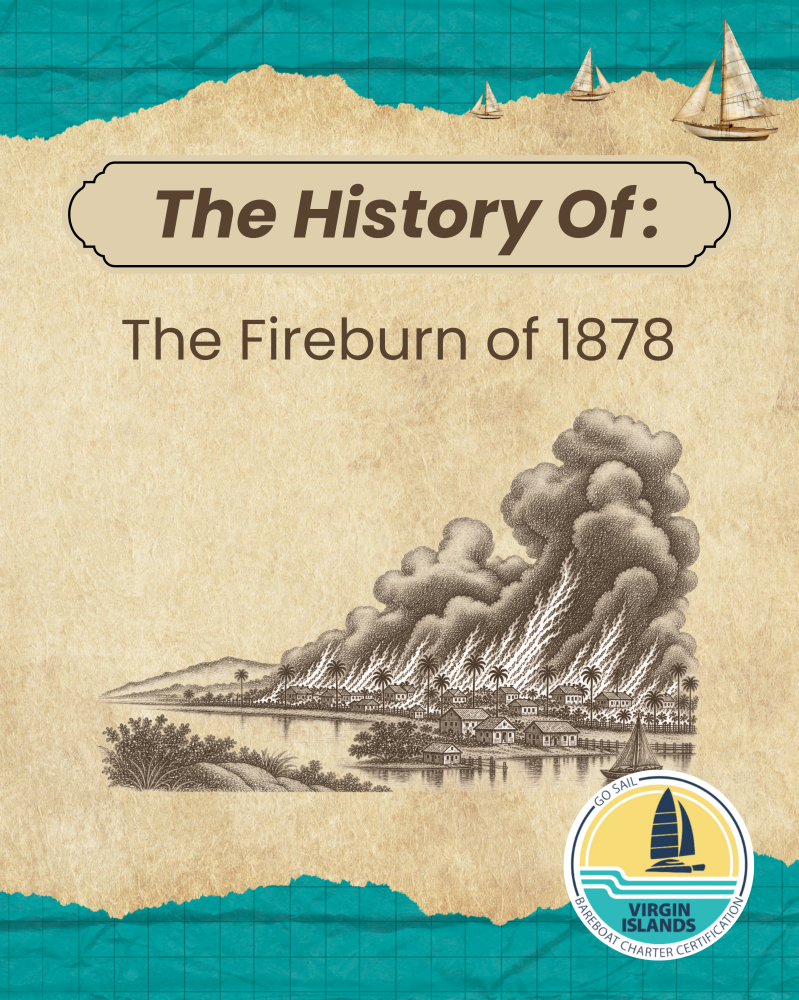
On October 1, 1878, fires swept through Frederiksted and the surrounding sugar plantations on St. Croix, then part of the Danish West Indies and now part of the U.S. Virgin Islands. The event became known as the Fireburn, marking a turning point in the island’s labor history.
How the Fireburn of 1878 started
October 1, 1878, began as Contract Day, when plantation workers gathered in Frederiksted to seek employment and negotiate their circumstances for the coming year. The atmosphere was tense. The workers’ anger had developed over years of low wages, restricted movement, and a labor system that kept much of the plantation economy under the control of the same people who had benefited from slavery.
Accounts of the precise sequence of events differ but as the gathering transformed into a wider uprising, fires began to break out through Frederiksted and the western part of St. Croix.
The Destruction from the Fireburn of 1878
The uprising continued for several days, leaving extensive destruction in its wake. The fires destroyed much of Frederiksted and more than 50 plantations including sugar estates, cane fields, mills, and other property. Yet, the destruction didn’t end when the flames died down.
The colonial authorities responded to the Fireburn with military force, arrests, and trials. Many people were imprisoned, and a number were executed. The human cost was severe and the response also revealed the unequal power relations that persisted under colonial rule.
The government sought to restore order, but the grievances that fueled the uprising couldn’t be separated from the labor system itself. The Fireburn became a defining moment in the struggle for better working conditions and greater control over workers’ lives.
The Queens of the Fireburn
Among the most enduring figures associated with the uprising are the women remembered as the Queens of the Fireburn.
Their names are commonly cited as Mary Thomas, known as Queen Mary; Axeline Salomon, known as Queen Agnes; Mathilda McBean, known as Queen Mathilda; and Susanna Abramsen, also remembered by the nickname “Bottom Belly.”
The workers chose Mary Thomas and two other women as queens to perform ritual and celebratory functions during the revolt. Historical records also identify Mary Thomas as “The Queen” during the uprising even though she wasn’t royalty in a conventional sense.
Investigators linked Queen Mary to a group that moved between plantations setting fires, and witnesses and officials described her as a prominent figure. Although the surviving records provide less detail about each woman’s individual actions, their names have endured in Virgin Islands history as a reminder that women were visible participants in a revolt that challenged the colonial labor system.
Remembering the Fireburn Today
Today, the Fireburn is remembered as one of the most significant events in St. Croix’s history. It represents both the devastating consequences of the uprising and the determination of workers who refused to accept the conditions imposed on them.
The Queens of the Fireburn have become enduring symbols of resistance, courage, and the fight for freedom. Their stories are commemorated in Virgin Islands art, history, and public memory, keeping their names connected to the broader struggle for equality.
The Fireburn also reminds us that emancipation and freedom are not necessarily the same thing. Although slavery was abolished in the Danish West Indies in 1848, plantation workers continued to face restrictive laws and difficult working conditions for decades afterward.
On October 1, 1878, the people of St. Croix made their grievances impossible to ignore. The Fireburn was a destructive and painful chapter in the island’s history, but it also marked a turning point in the struggle to make freedom mean more than a declaration.
Its legacy lives on in the stories of the workers who demanded change and in the women whose names became inseparable from their fight.
Learn more About the Fireburn
The Virgin Islands have stories that reach far beyond their beautiful beaches and turquoise waters. From the Fireburn on St. Croix to the history of the islands’ Indigenous peoples and the legacy of colonial rule, every island has a story to tell.
Sailing is a unique way to experience the region, discover its diverse cultures, and connect with the history that shaped these islands.
Ready to explore the Virgin Islands for yourself? Discover sailing courses and adventures with Go Sail Virgin Islands.